
What do you want to automate
with ClickSend SMS and Guru?
Prompt, edit and deploy AI agents that connect to ClickSend SMS, Guru and 3,000+ other apps in seconds.
Trusted by 1,000,000+ developers from startups to Fortune 500 companies
















Popular Ways to Connect ClickSend SMS with Guru#
Popular ClickSend SMS and Guru Triggers#
Emit new event for each new incoming SMS message received. See the documentation
Emit new event when a user makes an edit to a card. See the documentation
Emit new event when a new voice message is received or sent. See the documentation
Emit new event when a user clicks on the "I read it" button in an Announcement. See the documentation
Emit new event when a new card is published. See the documentation
Popular ClickSend SMS and Guru Actions#
Creates a new contact in a specific list. See the documentation
Links an existing tag to a specified card in Guru. See the documentation
Sends a new MMS to one or multiple recipients. See the documentation
Sends a new SMS to one or several recipients. See the documentation
Overview of ClickSend SMS#
The ClickSend SMS API unlocks the potential to integrate robust messaging capabilities into your workflows. With Pipedream, you can not only send SMS messages programmatically but also automate notifications, streamline communication based on events, and much more. Whether you're confirming orders, alerting staff, or engaging with customers, ClickSend and Pipedream make these tasks seamless.
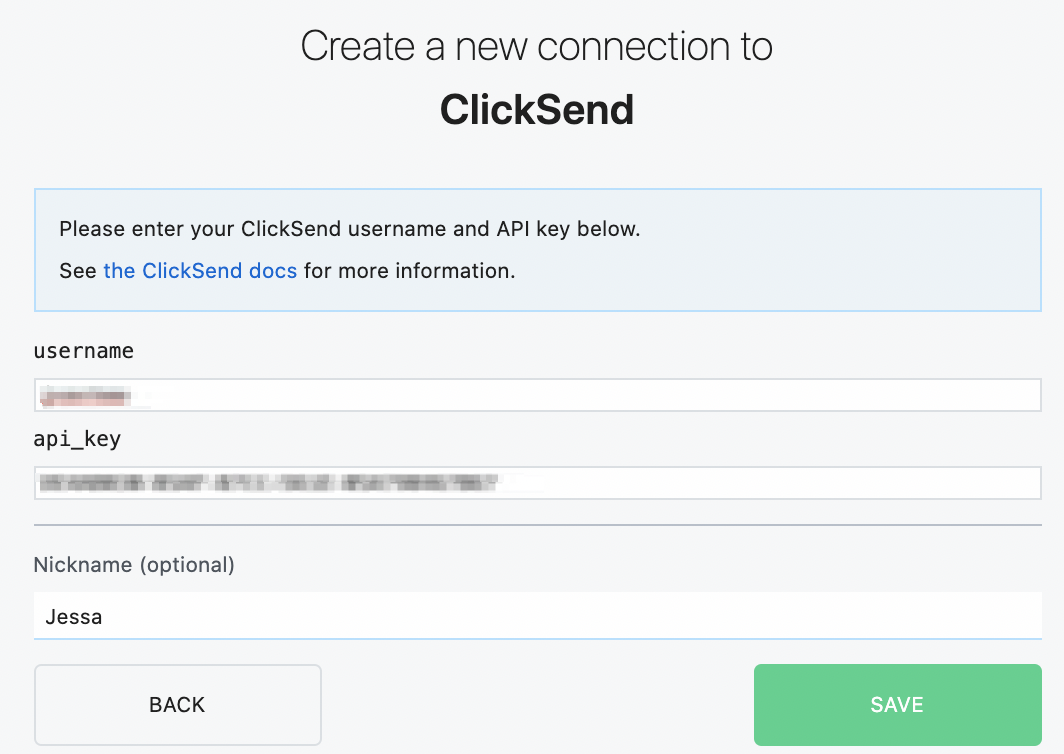
Connect ClickSend SMS#
import { axios } from "@pipedream/platform"
export default defineComponent({
  props: {
    clicksend: {
      type: "app",
      app: "clicksend",
    }
  },
  async run({steps, $}) {
    return await axios($, {
      url: `https://rest.clicksend.com/v3/account`,
      auth: {
        username: `${this.clicksend.$auth.username}`,
        password: `${this.clicksend.$auth.api_key}`,
      },
    })
  },
})
Overview of Guru#
The Guru API on Pipedream enables the automation of knowledge sharing and management tasks within your team or organization. Using this API, you can programmatically interact with Guru's knowledge base, including retrieving card details, creating new cards, and updating existing content. By leveraging Pipedream's serverless platform, you can craft workflows that trigger based on events from other services, process the data, and perform actions in Guru to keep your team's knowledge up to date and accessible.
Connect Guru#
import { axios } from "@pipedream/platform"
export default defineComponent({
  props: {
    guru: {
      type: "app",
      app: "guru",
    }
  },
  async run({steps, $}) {
    return await axios($, {
      url: `https://api.getguru.com/api/v1/teams`,
      headers: {
        "Accept": `application/json`,
      },
      auth: {
        username: `${this.guru.$auth.username}`,
        password: `${this.guru.$auth.api_key}`,
      },
    })
  },
})
Community Posts#

Trusted by 1,000,000+ developers from startups to Fortune 500 companies